
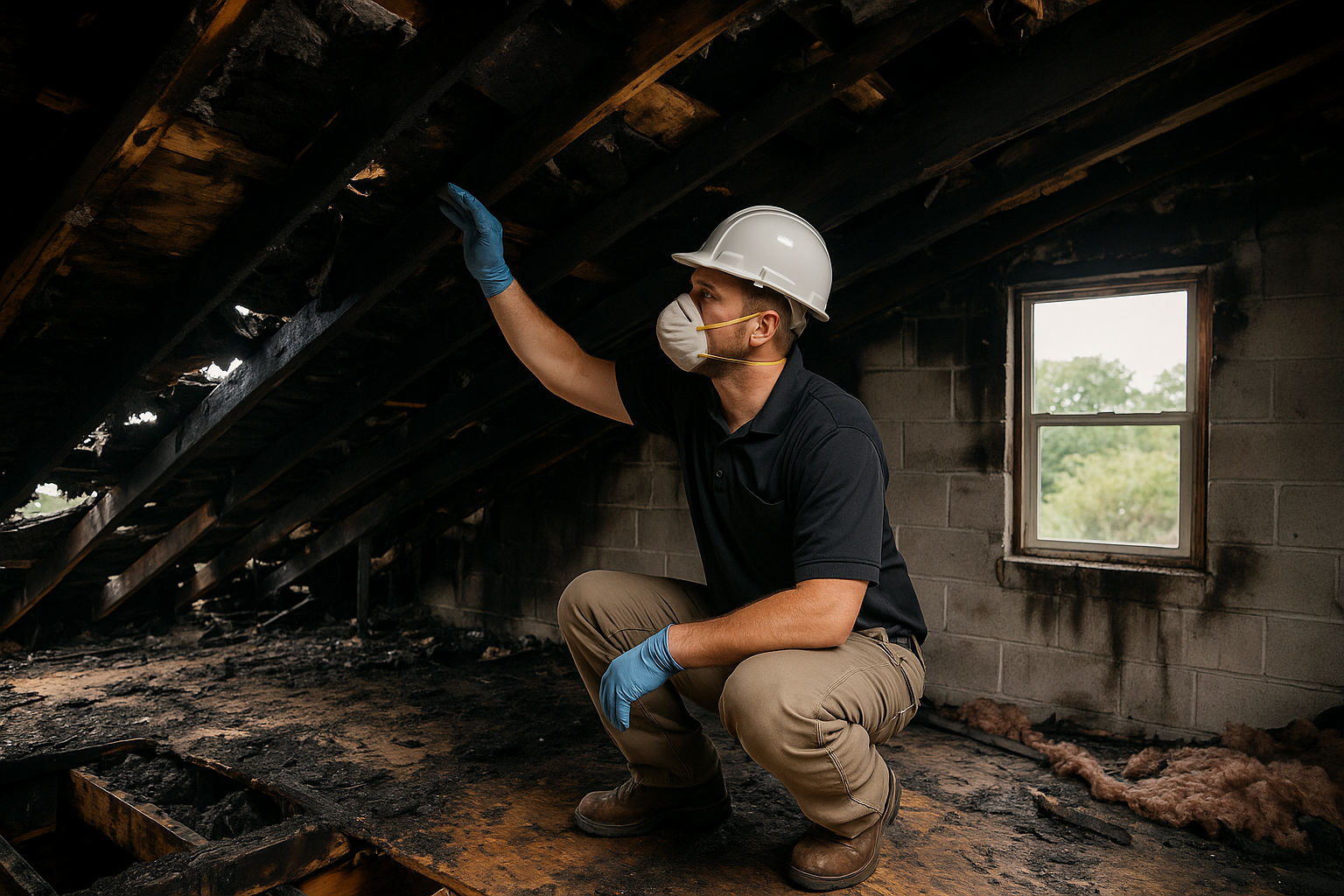
Attic fire damage restoration tampa is often more complex than visible charring because smoke and soot travel into concealed spaces and cling to structural materials. Attic fires in Tampa push hot gases through soffits, vents, and insulation and leave lingering odors that homeowners often cannot see.
- Attic Fire Damage Restoration Tampa: Why Smoke Hides
- Attic Fire Damage Restoration Tampa And Attic Smoke Damage Cleanup
- Attic Fire Repair Tampa: Repair Vs Replace For Attics
- Quick Checklist
- Tampa Bay Storms, Humidity And Structural Risks
- Frequently Asked Questions
Attic Fire Damage Restoration Tampa: Why Smoke Hides
Attic fires send fine soot and acidic smoke into gaps behind drywall, under roof sheathing, and into HVAC plenums. Attic airflow and pressure differences push smoke into wall cavities and into the living space over days. Attic insulation traps particles and holds odor molecules, making smoke damage seem hidden.
Attic fire damage restoration in Tampa must address the entire contamination pathway to remove odors and protect indoor air. Attic soot often requires targeted cleaning of joists, rafters, and insulation to prevent long term staining and corrosion. Attic smoke can accelerate corrosion of metal fasteners in a humid Florida attic and add mold risk if water intrusion follows.
Attic Fire Damage Restoration Tampa And Attic Smoke Damage Cleanup
Attic smoke damage cleanup begins with containment and safety checks for structural stability and electrical hazards. Attic soot cleanup in Tampa often needs HEPA vacuuming, dry sponging, and thermal fogging to neutralize odor molecules. Attic vents and HVAC systems require inspection because soot travels through ducts and spreads contamination.
We link practical cleanup steps to professional services for clear homeowner decisions and rapid mitigation. See our fire damage restoration service page for more about scope and timelines at fire damage restoration. Attic vent cleaning and soot removal also relate closely to duct and vent work described in our soot vents article at soot damage cleanup for vents.
Attic Fire Repair Tampa: Repair Vs Replace For Attics
Attic fire repair decisions in Tampa balance safety, cost, and long term performance. Attic framing with surface scorching may be repaired, while charred members often need replacement to meet code. Attic fire repair typically ranges from minor repairs at $3,500 to full rebuilds above $15,000 depending on structural and smoke damage in Hillsborough County homes.
Attic restoration often blends structural drying, smoke cleaning, insulation replacement, and electrical repairs after fire suppression water. A repair versus replace discussion considers remaining wood strength, extent of soot contamination, and moisture introduced by firefighting. In many Tampa homes after major storms, we often find hidden water damage inside drywall and insulation that homeowners cannot see.
One realistic technician observation is that soot migrates along wiring and duct routes and often contaminates ceiling fixtures and insulation beyond the visible fire area. In our experience in Tampa attics, soot tracks behind ductwork are common and need targeted cleaning.
Quick Checklist
- Ensure Everyone Is Safe And Power Is Off Before Reentry.
- Document Damage For Insurance With Photos And Notes.
- Call A Licensed Team For Structural And Smoke Testing.
- Remove Wet Insulation And Begin Structural Drying If Present.
- Schedule Attic Smoke Damage Cleanup And Air Quality Tests.
Tampa Bay Storms, Humidity And Structural Risks
Tampa sits in a climate with high humidity and frequent storm threats that compound attic fire outcomes. Heavy rainfall and hurricane winds can cause roof leaks that introduce water into soot-laden attics and increase mold risk. Flooding and storm surge present additional contamination concerns after coastal storm damage in Tampa Bay properties.
Electrical fire risks increase when salt air corrodes connections or when overloaded circuits run through attics. Insurance claim challenges after disasters include proving smoke migration and quantifying hidden losses in Hillsborough County. FEMA and local guidance help homeowners prepare for fire and storm emergencies and navigate claims at FEMA guidance.
Structural drying and mold prevention are critical after water intrusion from firefighting or storms. Attic restoration in Tampa often coordinates with roof repair, HVAC cleaning, and moisture control to avoid long term indoor air quality problems.
Frequently Asked Questions
How Long Does Attic Smoke Odor Last After A Fire?
Smoke odor persists until all soot and odor molecules are removed from surfaces and insulation. Professional cleaning, odor counteractants, and HVAC cleaning usually remove odors within days to weeks depending on severity.
Can Insulation Be Cleaned Or Must It Be Replaced?
Loose fill insulation usually requires replacement after heavy soot contamination or water exposure. Batt insulation may be removable if lightly affected, but replacement is often safer to control odors and mold growth in Tampa humidity.
Will Soot In Ducts Recontaminate My Home After Cleanup?
Soot in ducts can blow into rooms and recontaminate spaces if not cleaned properly. Professional duct cleaning and sealing plus system testing prevents reentrainment and protects indoor air quality.
How Do Insurance Companies Handle Hidden Smoke Damage?
Insurers require documentation and may send adjusters for scope verification in Tampa claims. Homeowners should document losses, keep records of professional assessments, and work with restoration teams experienced in claims support.
When Should I Call A Professional For Attic Fire Repair?
Call a licensed restoration company immediately if you suspect structural damage, lingering smoke, or electrical hazards. Professionals provide safety assessments, containment, and a repair plan that aligns with local codes and insurance requirements.