
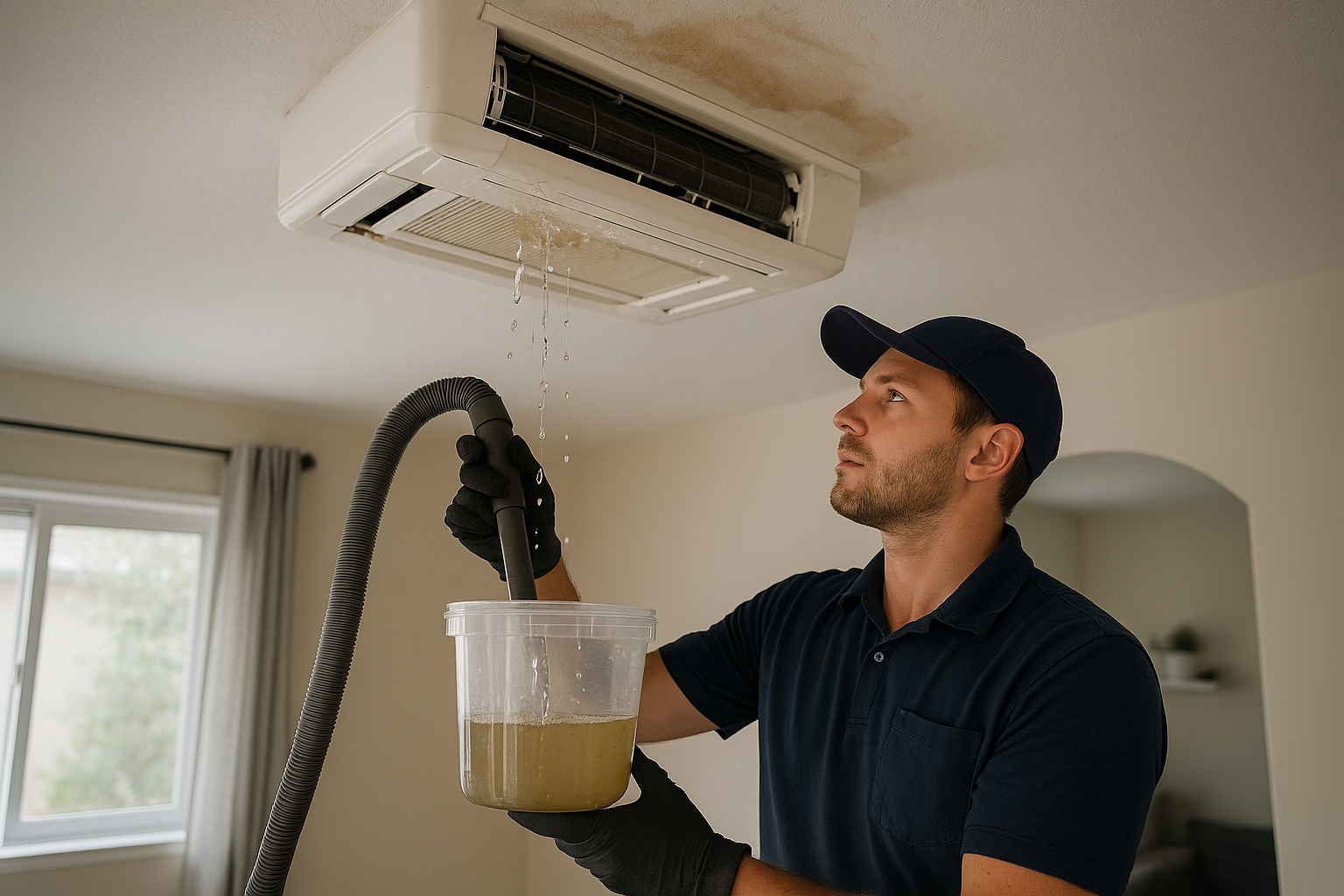
AC leak water damage tampa shows up as brown ceiling stains, sagging drywall, and sometimes mold in attics. Tampa homeowners face this problem often because Florida humidity, summer storms, and aging air conditioners create persistent moisture. RestoWRX explains the causes, local risks, and restoration steps to protect homes across Tampa and Hillsborough County.
- Why AC Leak Water Damage Tampa Happens
- Water Damage Restoration Tampa Services
- Quick Checklist
- AC Water Damage Costs And Repair Guidance
- Frequently Asked Questions
Why AC Leak Water Damage Tampa Happens
Air conditioners in Tampa move large volumes of humid air across cold evaporator coils. When a drain line clogs or a pan cracks, condensate overflows and tracks into ceiling cavities. Condensation can also run down supply ducts and drip through ceiling penetrations during heavy use. Roof leaks and poor attic insulation can worsen the problem by letting warm humid air hit cold surfaces. Tampa storms and hurricane-season rainfall raise indoor humidity and test weak AC drains.
Air conditioning systems fail more often in coastal Florida because salt air corrodes components and outdoor units. Homes in Hillsborough County often show slow drips for months before a visible ceiling stain appears. In many Tampa homes after major storms, we often find hidden water damage inside drywall and insulation that homeowners cannot see.
Air Conditioner Leak Cleanup Tampa Essentials
Quick cleanup prevents mold growth in warm Tampa climates. Technicians first stop the leak and remove standing water from ceilings and attics. Technicians cut out saturated drywall and insulation when materials hold moisture above safe levels. Technicians then dry cavities using air movers and dehumidifiers until moisture meters show acceptable readings. The same steps apply for air conditioner leak cleanup tampa whether the source is a clogged drain or a failed condensate pump.
Homeowners should also inspect condensate lines annually and clear algae buildup. In our experience, timely interventions cut mold risk and reduce repair costs in Tampa homes.
Water Damage Restoration Tampa Services
RestoWRX provides full water damage restoration in Tampa from emergency extraction to structural drying and rebuilds. We offer rapid response after hurricane storms, heavy rainfall, or roof leaks that let water reach ceilings. We document damage for insurance and help homeowners with claims and mitigation plans. For more detail on our water mitigation process, see our water damage restoration services page.
We also handle related fire and smoke damage after electrical faults that sometimes follow prolonged leaks. Prolonged wet conditions raise electrical fire risks when outlets and fixtures stay damp in attics or ceilings. For related plumbing emergencies, review our guidance on burst pipe water damage in Tampa.
Quick Checklist
- Shut Off The AC And Power If Ceiling Is Saturated.
- Contain And Remove Standing Water From Ceilings And Attics.
- Document Visible Damage With Photos For Insurance.
- Call A Certified Tampa Restoration Team Quickly.
- Schedule Mold Inspection And Structural Drying.
AC Water Damage Costs And Repair Guidance
Tampa repair costs vary by scope and contamination. Small ceiling repairs can run a few hundred dollars. Moderate drying and drywall repair range from $1,000 to $5,000. Major attic, structural drying, and full ceiling replacement after mold can exceed $10,000. Insurance may cover storm-related damage, but carriers often dispute gradual damage claims.
Decide Repair Vs Replace Based On Damage Extent And Equipment Age. Technicians recommend replacing corroded drip pans and old condensate pumps. Technicians may repair minor drywall damage instead of full replacement when materials dry fully within 48 to 72 hours. A replace decision also depends on mold presence and structural compromise.
One realistic technician field observation is that many Tampa homes have rusted drain pans that leak slowly and hide behind ceiling paint. An experience-based sentence is that early drying and documented mitigation usually speed insurance approval in our Tampa projects.
For emergency response and a full scope estimate, visit our water damage restoration page or call our local team.
We follow FEMA guidance on flood and water safety to assess contamination risk and advise when to treat water as contaminated. See FEMA for flood recovery steps and safe cleanup practices.
If you notice recurrent ceiling wet spots after AC use, call RestoWRX for an inspection. Our technicians check condensate lines, insulation, and attic vents to find hidden leakage paths. We serve Tampa, Tampa Bay communities, and surrounding Hillsborough County neighborhoods.
Contact our crew for same-day service in severe leaks or storm events.
Frequently Asked Questions
How Do I Know If An AC Leak Caused Ceiling Damage?
Stains that appear below ducts or the air handler suggest an AC leak. You may also notice a musty smell, higher indoor humidity, or active dripping during AC cycles. Technicians use moisture meters to confirm hidden saturation behind drywall.
Can I Dry The Ceiling Myself After An AC Leak?
You can remove small wet patches and run fans for short periods. You should call professionals when water covers large areas, insulation stays wet, or mold appears. Professionals use drying equipment and monitor moisture until safe levels return.
Will Insurance Cover AC Leak Water Damage In Tampa?
Insurance coverage depends on policy terms and whether the leak happened suddenly or from neglect. Storm-related roof intrusion typically receives coverage, while gradual maintenance issues may not. We help Tampa homeowners document damage and communicate with insurers.
How Long Before Mold Develops After An AC Leak?
Mold can begin within 24 to 48 hours in Tampa humidity if materials stay wet. Quick removal and drying prevent most mold growth. Technicians perform mold assessments when conditions suggest a contamination risk.
What Are Typical Repair Times For Ceiling Water Damage?
Small repairs may finish in a day or two after drying. Structural drying often takes three to seven days. Full rebuilds after contamination or mold can take weeks depending on scope, materials, and permit needs.