
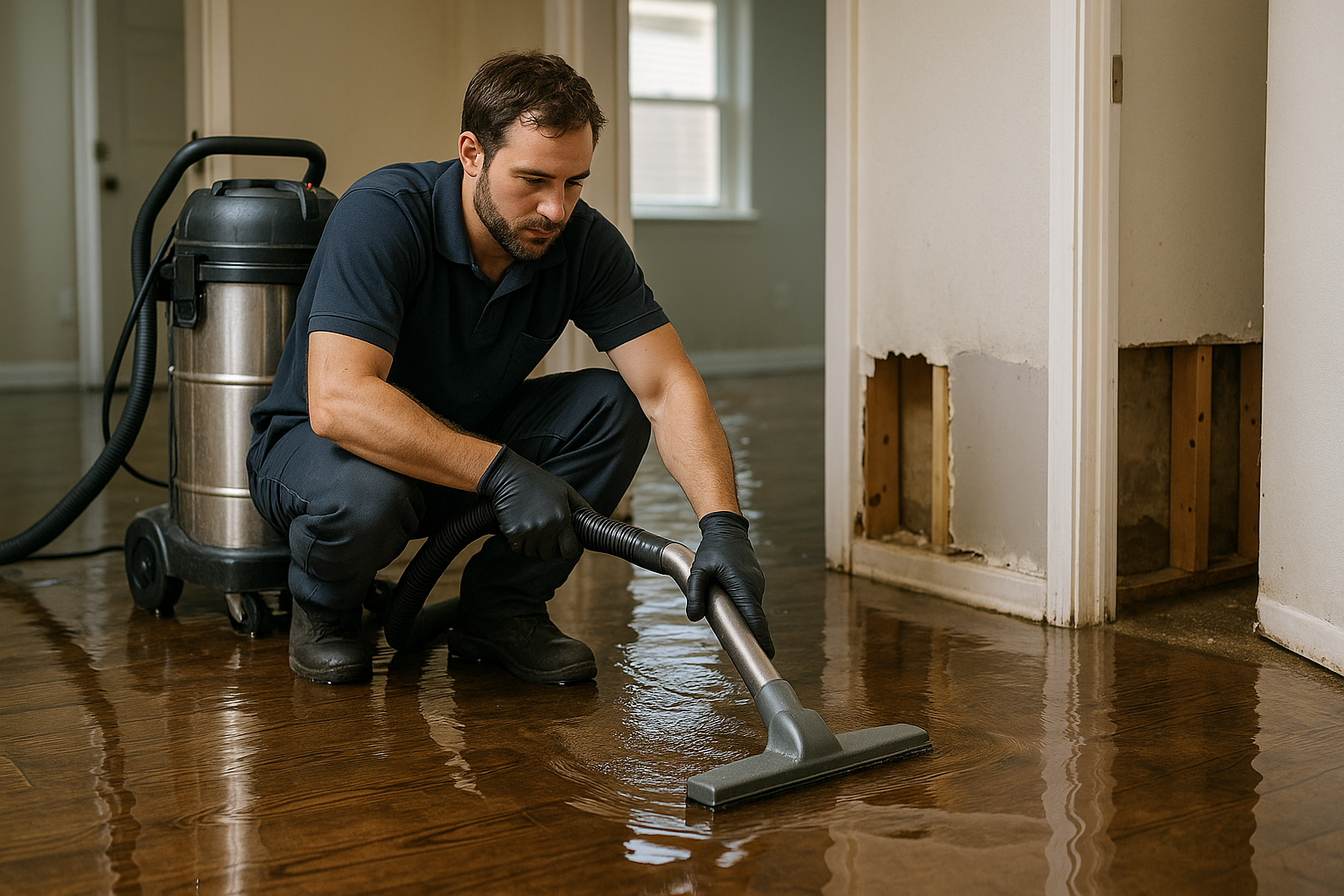
Flood damage restoration tampa requires quick action after storms in Tampa to limit ruined flooring, swollen drywall, and hidden mold growth. Floodwater and high Florida humidity push water into baseboards, under floors, and into wall cavities where problems escalate quickly without professional water extraction services.
- How Floodwater Damages Flooring
- Drywall, Insulation And Hidden Moisture
- Water Extraction Services Tampa And Drying
- Flood Cleanup Company Tampa Repair Decisions
- Quick Checklist
Flood Damage Restoration Tampa: How Floodwater Attacks Flooring
Floodwater brings silt, salt, and bacteria that stain and weaken floor coverings in Tampa homes. Hardwood floors cup and warp when moisture soaks the plank edges and subfloor, and engineered wood delaminates where glue bonds fail. Tile installations commonly fail when grout washes out or the thinset loosens under hydrostatic pressure.
Flood damage restoration tampa must include inspection of subfloor and fast drying to avoid mold and structural rot. Vinyl and laminate often appear salvageable but can trap contaminated water underneath, which encourages mold in the humid Tampa climate. Ceramic tile may look intact but can hide swollen underlayment that will later fail.
In many Tampa homes after major storms, we often find hidden water damage inside drywall and insulation that homeowners cannot see. Technician observations show that in the first 24 to 72 hours flooring problems escalate in Tampa because of high humidity and warm temperatures.
Flood Damage Restoration Tampa: Drywall, Insulation And Hidden Moisture
Drywall absorbs floodwater and loses structural integrity within hours in Florida humidity. Insulation insulation becomes a twofold problem because saturated insulation holds moisture and feeds mold spores. Wall cavities hide contaminated floodwater that can remain after surface areas appear dry.
Flood damage restoration tampa crews check for hidden moisture with thermal imaging and moisture meters before recommending repair or replacement. Mold can begin to grow within 48 hours in humid Tampa Bay homes, and wallboard that softens or crumbles must be removed to stop contamination. For guidance on hidden wall damage and inspection, see our hidden wall inspection guide for Tampa homes at hidden wall inspection guide.
Water Extraction Services Tampa And Rapid Structural Drying
Fast water extraction services reduce exposure time and lower restoration costs after flooding in Tampa. Trucks with high-capacity pumps and wet vacuums remove standing water, and technicians set up air movers and dehumidifiers to dry subfloors and framing.
Structural drying includes controlled demolition in some areas to allow air circulation and to inspect framing. Repair specialists often balance drying time versus replacement costs when humidity slows evaporation in Hillsborough County and nearby Pinellas County. For comprehensive restoration options see our water damage restoration services at water damage restoration services.
Flood Cleanup Company Tampa: Repair Versus Replace Decisions
Choosing repair or replace depends on contamination level, material type, and cost estimates after flood events in Tampa. Repairs for small jobs may start around $500 to $1,500, typical flooring and drywall restoration often ranges from $1,500 to $6,000, and major structural work can reach $10,000 or more depending on storm surge and contamination.
Flood cleanup company Tampa teams run through options with homeowners and document damage for insurance claims. Insurance claim challenges are common after hurricanes and heavy rainfall in Florida, and thorough documentation helps speed approvals. Experience shows that replacing contaminated drywall and insulation is often safer than costly attempts to dry and disinfect in severe floodwater contamination.
Quick Checklist
- Stop water entry and call a certified flood cleanup company immediately.
- Document damage with photos and notes for insurance.
- Start professional water extraction services within 24 hours when possible.
- Remove wet contents and separate salvageable items for inventory.
- Schedule mold inspections if humidity or odors persist after drying.
When floodwater enters a home in Tampa, call RestoWRX for a fast, local response backed by field experience. Our technicians understand Tampa Bay storms, storm surge risk, and the urgency of rapid extraction and drying to limit electrical fire risks, smoke and soot complications, and long-term mold exposure.
Frequently Asked Questions
How Quickly Should I Start Flood Damage Restoration In Tampa?
You should start professional extraction within 24 hours when possible to limit mold and structural damage. Technicians focus on removing standing water, drying framing, and documenting damage for insurance.
Can Flooring Be Saved After Flooding?
Some flooring can be salvaged depending on material and contamination level. Hardwood and laminate often need replacement when cupping or delamination occurs, while tile may be salvageable after subfloor repair.
Will My Insurance Cover Flood Repairs?
Flood insurance coverage varies and many standard home policies do not include flood or storm surge damage. Document the damage and consult your insurer and a restoration company that can provide estimates and reports to support claims.
What Are Typical Costs For Flood Damage Restoration In Tampa?
Costs vary by scope and contamination and range from a few hundred dollars for small cleanups to thousands for structural repairs. Get onsite estimates that include drying equipment, demolition, mold remediation, and rebuild costs.
How Do I Prevent Mold After Flooding In Florida?
Rapid drying, removal of wet insulation and porous materials, and professional mold remediation reduce long-term growth. Keep humidity low with dehumidifiers and monitor hidden cavities with moisture meters.
For authoritative guidance on flood hazards and preparedness, consult FEMA for regional flood resources and safety tips at https://www.fema.gov/floods.