House fire restoration Tampa requires quick assessment because fires change structural integrity fast and create hidden hazards in Tampa homes. The following guide explains how fire, smoke, heat, and water from firefighting affect framing, foundations, and finishes in Tampa and the greater Tampa Bay area. The article includes local cost guidance, insurance notes, and practical steps homeowners can take after a house fire.
- House Fire Restoration Tampa: How Fires Weaken Structure
- Home Fire Cleanup Tampa: Structural Concerns And Steps
- House Fire Restoration Tampa: Repair Vs Replace Decisions
- Fire Damage House Repair Tampa: Stabilization And Framing
- Quick Checklist
House Fire Restoration Tampa: How Fires Weaken Structure
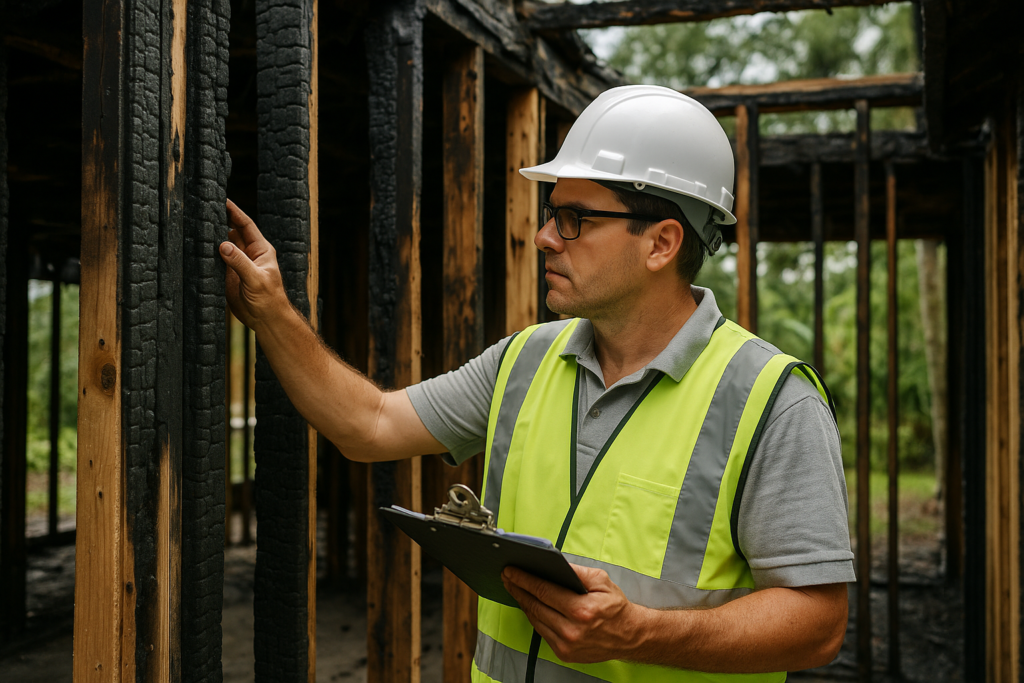
Fire damages more than finishes because heat and flame change wood, steel, and concrete at a structural level. Intense heat causes wood to char and lose load capacity, while steel can warp and lose strength at high temperatures. Concrete and masonry can spall when moisture inside them expands under heat, leaving hidden voids and weakened support. Smoke and soot travel through cavities and can corrode metal fast in Tampa because salt air and humidity accelerate chemical reactions.
In many Tampa homes after major storms, we often find hidden water damage inside drywall and insulation that homeowners cannot see. Our technicians have removed charred framing from several older bungalows in Tampa and documented corrosion from salt air near coastal neighborhoods. Tampa Bay humidity also promotes rapid mold growth after firefighting water so structural drying is urgent.
Firefighters often use large water volumes to suppress flames, and that water soaks into layers beneath floors and behind walls. Water intrusion from roof leaks during storms can complicate restoration in the rainy season. Storm surge and floodwater contamination after hurricanes can further damage homes in Hillsborough County and raise cleanup complexity.
Home Fire Cleanup Tampa: Structural Concerns And Steps
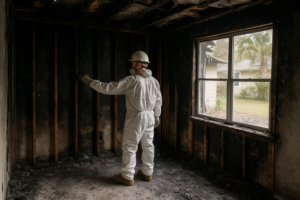
Home fire cleanup in Tampa begins with a safety assessment and boarding to prevent further wind or rain damage. Professionals inspect framing, roof trusses, and load-bearing walls for signs of compromise. Technicians use moisture meters and thermal imaging to find wet pockets and hidden char that stay dangerous long after the flames go out. Technicians then remove debris, secure utilities, and set up drying equipment to limit mold and secondary damage.
Homes near the coast often face combined issues from salt air and humidity that accelerate corrosion of fasteners and metal connectors. Flooding from heavy rainfall or storm surge can contaminate interiors, forcing more extensive sanitizing and controlled demolition. Homeowners should document damage and call their insurer quickly while preserving evidence for claims.
RestoWRX offers focused fire damage restoration services for structural cleanup and drying. Learn more about our fire damage restoration services here: fire damage restoration services. For attic-specific issues and lost insulation after attic fires, see our attic fire damage restoration page: attic fire damage restoration.
House Fire Restoration Tampa: Repair Vs Replace Decisions
Deciding whether to repair or replace depends on structural assessment, cost, and code compliance. Engineers may recommend partial replacement when char depth exceeds critical limits in load-bearing members. Contractors often repair cosmetic damage but replace compromised framing and sheathing to restore safety. Insurance adjusters evaluate replacement costs and depreciation, which can lead to disputes in complex cases.
Typical Tampa restoration cost ranges vary by severity and contamination. Small kitchen or localized fires can start around five thousand dollars. Moderate structural and smoke cleanup often runs between fifteen thousand and thirty thousand dollars. Large or rebuild-level losses near the coast can exceed fifty thousand dollars when accounting for mold remediation, structural framing replacement, and updated roof systems after storm-related damage.
Homeowners should weigh repair vs replace options while considering future resilience to Florida storms. Replacing materials with moisture-resistant products and improved roof underlayment reduces risk from hurricanes and roof leaks. Local building codes in Hillsborough County may require upgrades during replacement work.
Fire Damage House Repair Tampa: Stabilization And Framing
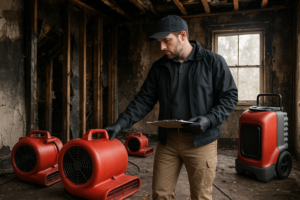
First steps in fire damage house repair involve structural stabilization and temporary shoring. Crews remove loose charred materials and secure sagging roofs or walls to prevent collapse. Technicians then evaluate framing connections, fasteners, and foundation impacts before permanent repairs. Structural drying after water damage uses dehumidifiers and air movers to prevent mold formation and further material degradation.
Smoke and soot damage require professional cleaning of vents, ductwork, and hidden cavities to avoid long-term odor and corrosion. Electrical fire risks are common in older Tampa homes, and licensed electricians must inspect systems before power is restored. Insurance claims often hinge on documented stabilization and professional estimates, so homeowners should keep clear records and photos.
FEMA guidance can help homeowners understand disaster safety and recovery standards when fires occur during large-scale storms. See FEMA guidance for preparedness and recovery at FEMA guidance.
Quick Checklist
- Call emergency services and do not re-enter an unsafe structure.
- Contact your insurer and document damage with photos and notes.
- Board openings and secure utilities to prevent water intrusion from storms.
- Hire licensed restoration pros for structural assessment and drying.
- Keep receipts and records of emergency repairs for claims.
If you need rapid, local help in Tampa, call RestoWRX for a fast structural assessment and professional house fire restoration Tampa services. Our crews work across Tampa Bay and Hillsborough County to stabilize homes, provide accurate estimates, and coordinate with insurers to speed recovery.
Frequently Asked Questions
How Soon Should I Start House Fire Restoration After A Fire?
Start assessment and stabilization as soon as the scene is safe and utilities are controlled. Begin drying and debris removal within 24 to 48 hours to limit mold and secondary damage. Contact professionals who understand Tampa humidity and storm risks for rapid response.
Can Structural Members Be Repaired Or Must They Be Replaced?
Technicians evaluate char depth, warping, and connector integrity to decide. Minor surface charring can often be repaired, while deep char in load-bearing members usually requires replacement. Engineers and local building officials in Hillsborough County provide final determinations.
Will Insurance Cover Fire Damage House Repair In Tampa?
Coverage depends on your policy, cause of loss, and exclusions for floods or storms. Document damage thoroughly and engage a restoration company that furnishes detailed estimates. Insurance disputes occur, so homeowners should work with experienced adjusters or public loss professionals when needed.
How Do You Prevent Mold After Firefighting Water Is Used?
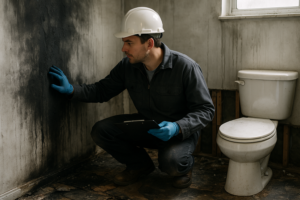
Professionals set up drying systems and remove wet insulation, drywall, and porous materials within 48 hours. Technicians use moisture meters and thermal imaging to find hidden wet pockets and follow up with antimicrobial treatments when appropriate. Tampa humidity makes this step critical to avoid long-term mold.
What Local Factors Affect Restoration In Tampa?
Coastal salt air, high humidity, and frequent storms affect corrosion, drying speed, and material choice. Flooding after hurricanes raises contamination risk and may change restoration scope. Local codes in Tampa and Hillsborough County also influence repair requirements and permit needs.