
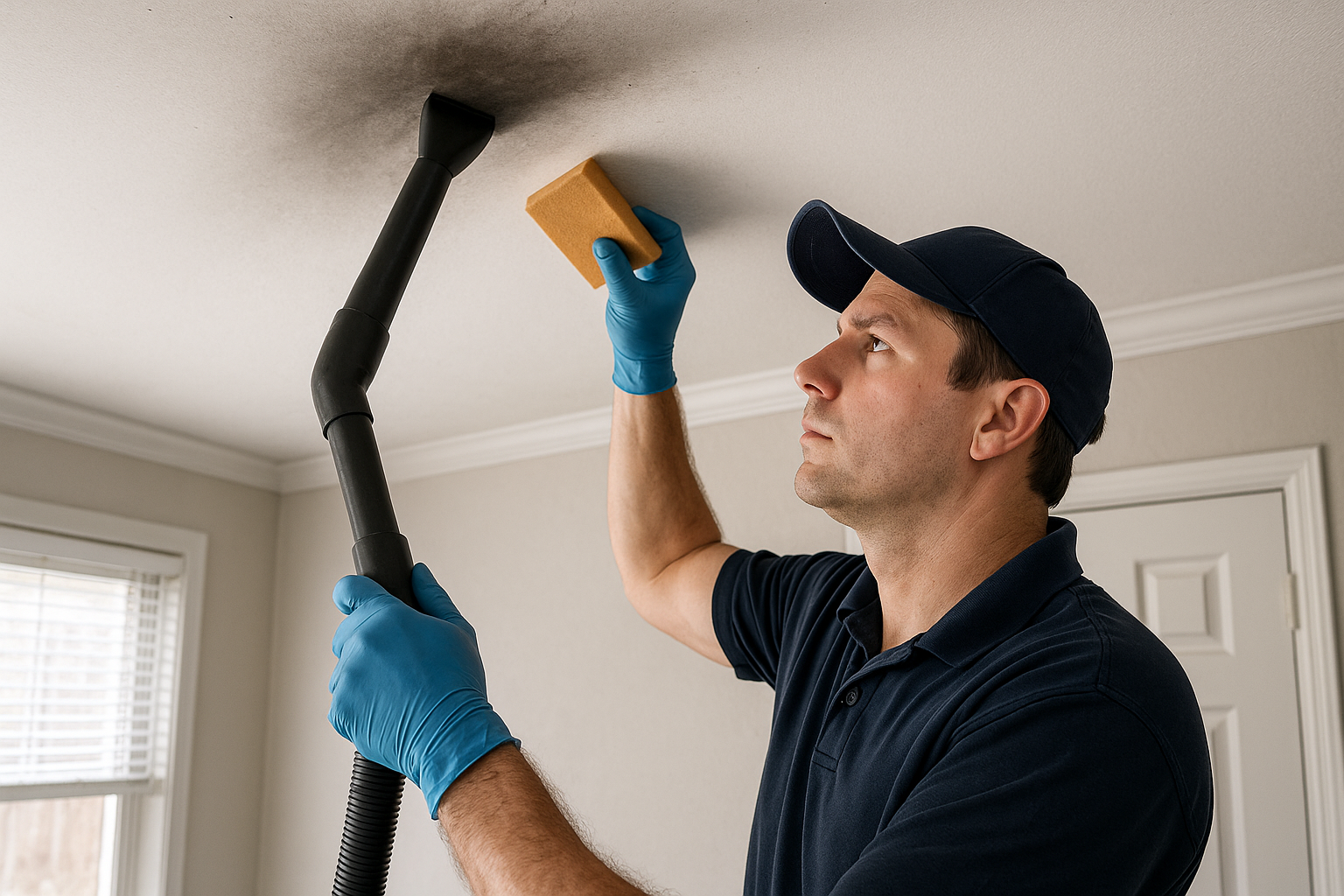
Soot removal services Tampa are essential after any house fire in Tampa because soot sticks to walls and ceilings and continues to damage surfaces and indoor air quality until cleaned. Soot forms from incomplete combustion and travels with smoke into every room of a home. Soot cleaning requires trained technicians to protect occupants, finish materials, and HVAC systems after a fire event.
- Why Soot Stains Walls And Ceilings After Fires
- Soot Removal Services Tampa: How Professionals Clean Soot
- Soot Removal Services Tampa: Health, Odor, And Air Quality
- Fire Damage Repair Tampa: Repair Versus Replace
- Quick Checklist
- Frequently Asked Questions
Why Soot Stains Walls And Ceilings After Fires
Soot stains start when combustion products cool and stick to building surfaces. Soot particles vary in size and composition depending on the materials burned. Soot from plastics and synthetic fabrics leaves oily, acidic residues that bond to paint and drywall. Soot from wood or paper often leaves powdery, easier to remove deposits. Soot will discolor ceilings and walls quickly, especially in Tampa homes where high humidity accelerates staining and chemical reactions.
In Tampa Bay after a kitchen fire or electrical blaze, smoke travels along ceiling cavities and through HVAC ducts. Soot will land in hidden spaces and on textured surfaces where cleaning is difficult. In many Tampa homes after major storms, we often find hidden water damage inside drywall and insulation that homeowners cannot see. Soot mixed with water from firefighting can smear and embed deeper into surfaces, making prompt cleaning essential.
Soot Removal Services Tampa: How Professionals Clean Soot
Technicians follow a clear sequence for professional soot cleaning to prevent cross contamination. Technicians first document the damage for insurance and then contain the work area to protect unaffected rooms. Technicians remove loose soot with HEPA-filtered vacuums and use dry sponges on painted surfaces to lift residues.
Technicians then apply appropriate chemical cleaners for oily or protein-based soot and rinse with controlled agitation. Technicians inspect HVAC systems and ductwork and often recommend cleaning or replacing filters to prevent soot recirculation. Technicians also evaluate porous materials like carpets and insulation and advise whether cleaning or replacement is required.
RestoWRX teams use industry-standard equipment and testing during soot cleaning and fire damage repair. More extensive smoke penetration in attic spaces or wall cavities sometimes requires targeted demolition and structural drying. For full restoration steps, see our fire damage restoration overview at RestoWRX fire damage restoration.
Soot Removal Services Tampa: Health, Odor, And Air Quality
Soot can carry carcinogens and respiratory irritants that reduce indoor air quality immediately after a fire. Soot particles are small enough to travel through HVAC systems and settle on soft goods, causing lingering odors. Soot cleaning includes odor control and air scrubbing with HEPA filtration to restore safe breathing conditions.
Homeowners in Hillsborough County should be cautious when re-entering homes after a fire. Homeowners should avoid touching soot and should keep children and pets away until professionals assess the situation. For federal guidance on smoke and fire hazards, review authoritative resources like the CDC fire safety page at CDC: Fires and Smoke.
Fire Damage Repair Tampa: Repair Versus Replace
Deciding to repair or replace depends on the material, extent of soot staining, and contamination level. Painted drywall with surface soot is often salvageable with professional cleaning. Porous items such as insulation, ceiling tiles, and some carpets usually require replacement when heavily contaminated.
Typical Tampa restoration cost ranges vary with size and scope. Small soot cleaning jobs may run $500 to $3,000. Moderate kitchen or small structure fire repairs often total $5,000 to $25,000. Major structural fire repairs and rebuilds commonly exceed $50,000 when framing, HVAC, and full interior finishes require work. Costs rise in coastal Tampa Bay areas when water intrusion from storms or hurricanes complicates cleanup.
Insurance claim challenges are common after storms and fires. Insurance adjusters evaluate smoke, soot, and water damage differently. RestoWRX helps document conditions, provide estimates, and work directly with insurers. Learn what professional restoration includes for Tampa projects at what professional restoration includes.
In many Tampa Bay rebuilds, electrical fire risks require updated wiring and licensed electricians to prevent repeat events. Structural drying and mold prevention are also crucial, especially with Florida humidity and post-fire water damage.
Quick Checklist
- Stop HVAC system until ducts are inspected and cleaned.
- Document damage with photos for insurance claims.
- Keep children and pets out of contaminated rooms.
- Call certified soot removal services to assess cleaning or replacement.
- Secure temporary board-up and roof tarping after a severe fire.
Contact RestoWRX for immediate response in Tampa and the greater Tampa Bay area. Contact our 24/7 team for on-site evaluation, emergency board-up, and a clear plan for soot cleaning and full fire damage repair in Tampa. Calling early reduces long-term staining and lowers restoration costs.
Frequently Asked Questions
Why Do Soot Stains Keep Reappearing After I Clean?
Soot can embed into porous materials and HVAC systems causing recontamination when the system runs. Professional crews clean ducts and soft goods to stop the cycle. Homeowners should wait for air quality tests before using the HVAC system again.
Can I Clean Soot Myself After A Small Kitchen Fire?
Homeowners can remove light, powdery soot from non-porous surfaces using dry sponges and HEPA vacuums. Homeowners should avoid water on protein or oily soot, which can smear and worsen staining. Hiring professionals reduces health risks and prevents costly mistakes.
How Long Before I Can Reoccupy My Home After Soot Cleaning?
Return times depend on contamination extent and odor removal. Small cleanings may allow reentry within 24 to 48 hours. Large projects with structural repairs and air quality mitigation can take days to weeks. Technicians will provide clearance based on testing.
Will My Insurance Cover Soot Removal In Tampa?
Many homeowners policies cover fire and smoke damage, but coverage varies. Documenting damage promptly and working with experienced restorers helps with claims. RestoWRX provides detailed estimates to support insurer reviews.
How Do Florida Storms Affect Soot And Fire Damage?
Hurricanes and heavy rainfall can introduce water into fire-damaged structures, causing soot to smear and mold to grow. Floodwater contamination raises health risks and often increases cleanup and replacement costs. Prompt drying and professional restoration are essential.