
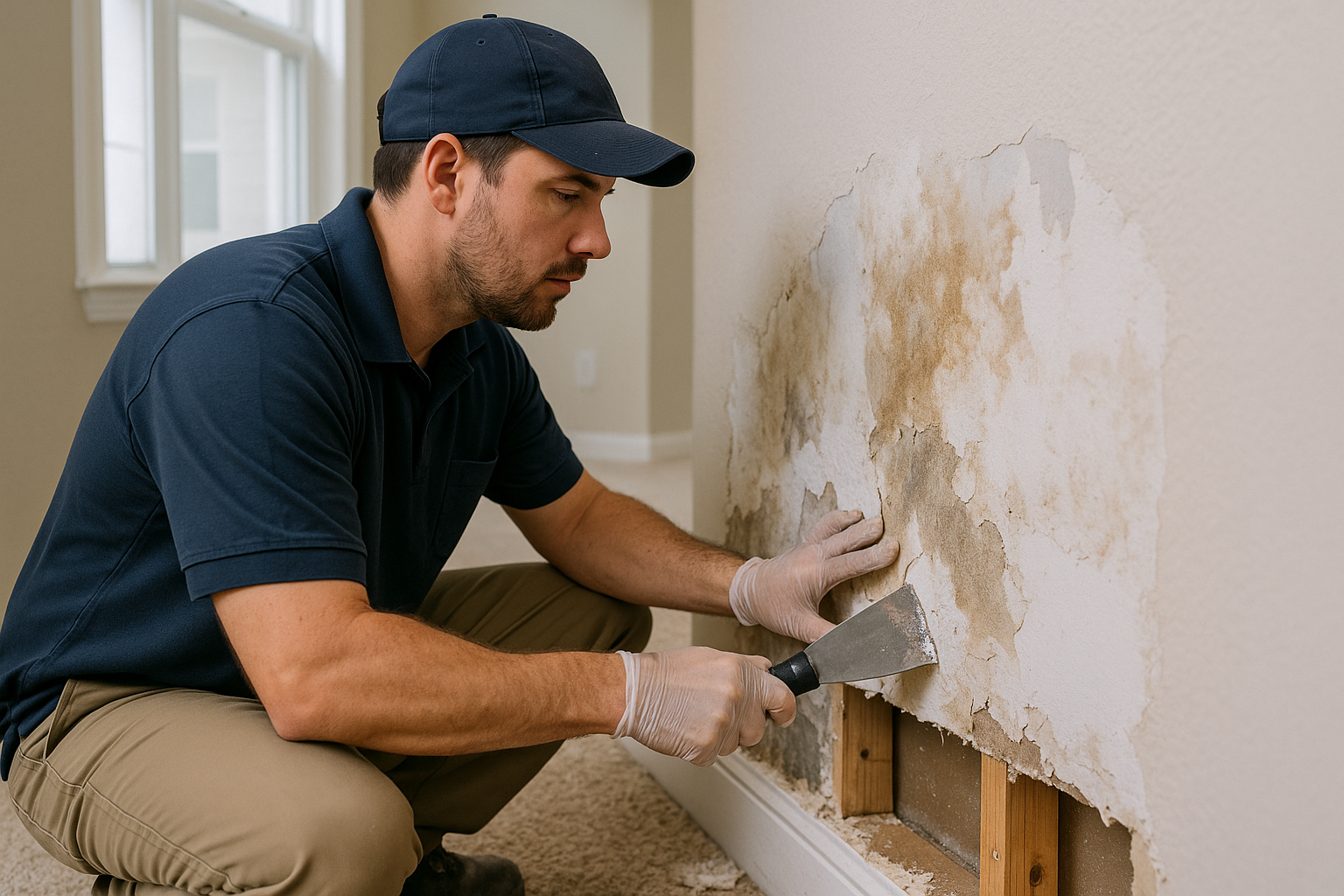
Water Damage Drywall Repair Tampa requires quick decisions after storms, roof leaks, or indoor plumbing failures to avoid mold, structural harm, and higher costs. Tampa homeowners face high humidity, frequent storms, and occasional hurricane surge that make wet drywall repair time sensitive. RestoWRX offers localized insight on when to repair versus replace drywall after water damage and how Tampa Bay conditions change the evaluation.
- When To Replace
- Cost And Process
- Wet Drywall Repair Tampa: Repair Vs Replace
- Structural Drying And Mold Risks In Tampa
- Quick Checklist
- Frequently Asked Questions
Water Damage Drywall Repair Tampa: When To Replace
Homeowners in Tampa must replace drywall when contamination, prolonged saturation, or structural compromise exist. Fast standing water from floods or storm surge often contaminates materials and forces removal. Floodwater brings bacteria and contaminants in many Tampa Bay events and makes replacement the safest choice. Lightning or electrical fires that cause water used to extinguish flames can damage drywall and wiring and require replacement for safety.
Technician observation: In many Tampa homes after major storms, we often find hidden water damage inside drywall and insulation that homeowners cannot see. From experience, prompt removal of wet drywall prevents mold outbreaks and speeds repairs for Tampa properties.
Water Damage Drywall Repair Tampa: Cost And Process
Typical Tampa restoration costs vary by scope and contamination level, with drywall replacement often ranging from $1,200 to $6,000 for moderate single-room repairs. Larger jobs after hurricane damage can exceed that range, especially with mold remediation or structural repairs in Hillsborough County. Insurance coverage often helps, but adjuster delays and flood exclusions can complicate claims in Tampa Bay storms. RestoWRX can guide homeowners through documentation and the claim workflow to reduce out-of-pocket expenses.
Process steps begin with water mitigation and drying, followed by containment, assessment, and measured demolition where needed. RestoWRX water damage restoration services use moisture meters and thermal imaging to find trapped water and to determine where drywall must come out to protect framing. You can learn more about our full mitigation approach on our water damage restoration services page by visiting water damage restoration services.
Wet Drywall Repair Tampa: Repair Vs Replace
Deciding between repair and replace depends on water source, exposure time, and drywall condition. Clean water from a burst supply line may allow for localized repair if exposure lasted under 48 hours and no contamination exists. Floodwater, storm surge, or sewage backup requires replacement because of contamination and residual pathogens. Tampa humidity accelerates mold growth, which tilts the decision toward replacement more often than in drier climates.
Repair typically involves cutting out the damaged section, drying framing and insulation, then installing new drywall and finishing. Replacement involves full removal of affected drywall, possible insulation replacement, addressing structural drying, and controlled demolition in contaminated scenarios. For step-by-step mitigation and savings strategies, review our water mitigation guide for Tampa homeowners at water mitigation tips.
Structural Drying And Mold Risks In Tampa
Structural drying in Tampa requires industrial dehumidifiers, air movers, and monitored moisture readings to remove humidity and trapped water. Florida humidity slows natural drying and elevates mold risk if drywall stays wet longer than 24 to 48 hours. Mold from wet drywall can spread to wood framing and HVAC systems, complicating restoration and increasing costs.
Storm surge and heavy rainfall events in the Tampa Bay area sometimes produce contaminated floodwater that necessitates disinfecting or removing structural elements. Electrical fire risks rise when water contacts circuits, so always shut off power before work starts. For safety guidance on cleanup and mold prevention, trusted resources include the CDC advice on flood cleanup at CDC flood cleanup guidance.
Quick Checklist
- Stop Water Source And Turn Off Power If Safe To Do So.
- Call A Certified Tampa Restoration Team Immediately.
- Document Damage For Insurance With Photos And Notes.
- Begin Structural Drying Within 24 To 48 Hours If Possible.
- Replace Contaminated Drywall And Insulation After Flooding.
Contact RestoWRX today for a fast inspection and reliable repair plan tailored to Tampa and Hillsborough County conditions. Call our team at 813-699-4009 for urgent assessments or schedule an appointment online with the RestoWRX restoration team to start mitigation and minimize long-term costs.
Frequently Asked Questions
How Quickly Should Wet Drywall Be Addressed In Tampa?
Drywall should be addressed within 24 to 48 hours to reduce mold growth in Tampa humidity. Rapid drying reduces repair scope and lowers costs.
Can I Save Money By Repairing Instead Of Replacing Drywall?
Repairing can save money when water was clean and exposure was brief and localized. Replacement is safer after floodwater or prolonged saturation to avoid mold and hidden damage.
Will Insurance Cover Drywall Replacement After A Storm?
Insurance often covers sudden water events like burst pipes, but flood damage from storm surge may need separate flood insurance. Keep detailed records and contact your agent quickly after Tampa storms.
How Do Technicians Decide What To Cut Out?
Technicians use moisture meters and thermal imaging to find wet areas and inspect for contamination or mold. Technicians remove drywall that traps moisture or shows structural compromise to speed drying and testing.
What Are Typical Timelines For Complete Drywall Restores?
Small repairs can finish in a few days, while larger or contaminated jobs take weeks for drying, remediation, and finishing. Timelines grow after Hurricanes or heavy flooding in Tampa Bay.