
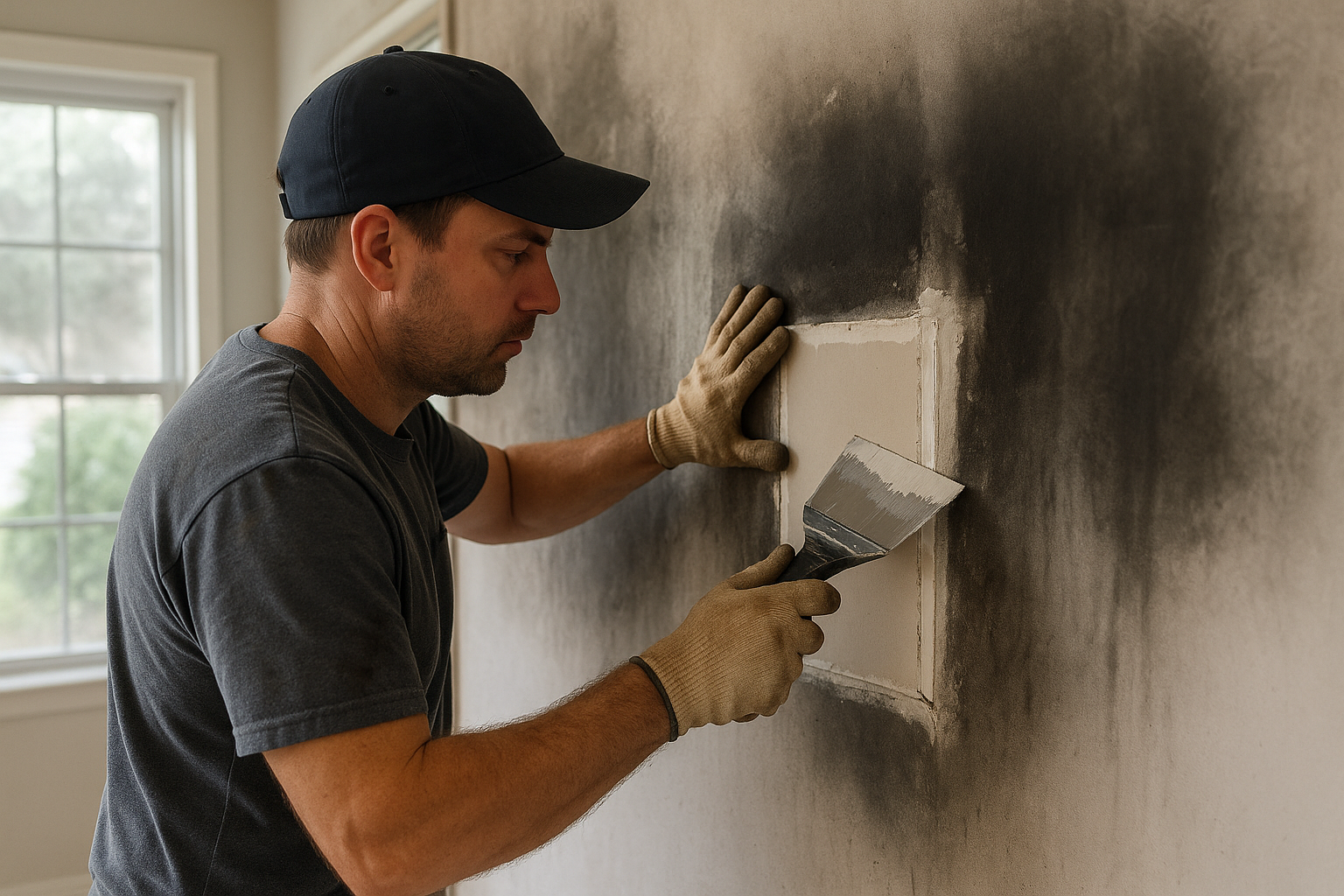
Fire Damage Drywall Repair Tampa starts with understanding how heat, smoke, soot, and water interact with wall systems and insulation in Florida homes. Fire and smoke leave deposits, warped gypsum, wet cavity insulation, and hidden char that can undermine safety and indoor air quality in Tampa homes. In this article we explain what to look for, outline repair versus replace decisions, and share local cost context for homeowners in Tampa and the greater Tampa Bay area.
- Fire Damage Drywall Repair Tampa: How Fire Affects Drywall And Insulation
- Fire Damage Drywall Repair Tampa After Smoke And Soot Exposure
- Fire Restoration Drywall Services In Tampa
- Assessing Repair Versus Replace And Local Cost Ranges
- Quick Checklist
- Frequently Asked Questions
Fire Damage Drywall Repair Tampa: How Fire Affects Drywall And Insulation
Fire attacks drywall both on the surface and behind the gypsum facing. Intense heat can delaminate paper facing and damage gypsum cores even when the surface looks intact. Smoke and soot migrate into wall cavities and saturate batt insulation, reducing R-value and trapping odors in Tampa homes. Water used during firefighting often soaks drywall and insulation, creating hidden moisture pockets that feed mold in Florida humidity.
In many Tampa homes after major storms, we often find hidden water damage inside drywall and insulation that homeowners cannot see. Our crews document char depth and moisture readings to decide if removal is required. Technicians note that drywall scorched less than 1/8 inch sometimes cleans and seals well, while deeper char usually means replacement for safety and structural reasons.
Fire Damage Drywall Repair Tampa After Smoke And Soot Exposure
Smoke damaged drywall repair requires a different approach than flame-only damage. Soot stains cling to drywall and primer, and hydrocarbons embed into porous surfaces. Cleaning with specialized dry sponges and chemical spoliers sometimes removes surface soot. Replacement becomes necessary when staining continues, odors persist, or insulation is contaminated in Tampa Bay humidity.
Soot also travels through HVAC ducts and deep into cavities, which makes soot removal an essential companion to drywall work. For detailed soot information see our article on soot removal services for Tampa homes.
Fire Restoration Drywall Services In Tampa
Fire restoration drywall work in Tampa blends demolition, drying, cleaning, and reconstruction. Technicians remove unsafe gypsum and contaminated insulation, then dry the cavity and apply odor control. Homes in Hillsborough County face Florida humidity that slows drying and increases mold risk, so rapid structural drying is essential. RestoWRX coordinates moisture removal and rebuild scopes to meet insurance documentation needs.
When you call for fire restoration services we perform moisture mapping, document damage for claims, and provide a clear scope for drywall repair or replacement. For more on our full-service approach see our fire restoration services page.
Assessing Repair Versus Replace And Local Cost Ranges
Repair versus replace decisions depend on char depth, soot penetration, and moisture content. Small surface burns and light soot can be cleaned and sealed. Deep char, structural compromise, or wet batt insulation typically require full replacement. Tampa homeowners also face secondary risks like mold growth due to high humidity and storm-driven leaks.
Typical Tampa restoration cost ranges vary by severity. Simple surface cleanup and patching of drywall often starts around a few hundred dollars per room. Full wall replacement with insulation, tape, texture, and paint commonly runs from a few hundred to over a thousand dollars per wall. Complex jobs that include structural drying, HVAC cleaning, and odor control can reach several thousand dollars. Insurance claim challenges commonly stem from underdocumented smoke migration and hidden moisture, so detailed reports help secure fair settlements.
One realistic technician observation comes from working across Tampa neighborhoods. In older Tampa homes knob-and-tube replacements and aged wall cavities often hide electrical faults that caused fires. Our experience shows homeowners benefit from electrical inspections after any fire restoration work. We often observe soot migration into attic insulation and ductwork during assessments, which increases scope and cost but improves long-term air quality when addressed.
Quick Checklist
- Document damage with photos and moisture readings for insurance.
- Shut off affected HVAC and avoid disturbing soot-covered surfaces.
- Remove visibly charred drywall and contaminated insulation promptly.
- Dry cavities quickly to prevent mold in Florida humidity.
- Hire licensed fire restoration drywall professionals for scope and safety.
Contact RestoWRX for a fast, local response in Tampa, Tampa Bay, and nearby Hillsborough County neighborhoods. Call to schedule an inspection and start proven fire restoration drywall work that addresses smoke, soot, moisture, and insurance documentation. Our Tampa crews respond to hurricane-related roof leaks, storm surge intrusion, and flooding that complicate fire-damaged walls.
Frequently Asked Questions
How Do I Know If Drywall Needs Replacement After A Fire?
Look for deep char, crumbling gypsum, tacky soot, or a persistent smoke odor. Measure moisture and inspect insulation because wet wall cavities often mean replacement. Consult a certified technician in Tampa for accurate assessment and documentation.
Can Soot And Smoke Odors Be Cleaned From Drywall?
Light soot can sometimes be cleaned and sealed, while heavy sooting or embedded hydrocarbons require replacement. Odors that persist after cleaning point to contaminated insulation or hidden deposits. Professional deodorization and HVAC cleaning often solve remaining odors in Tampa homes.
Will Insurance Cover Fire Damage Drywall Repair Tampa Costs?
Policies vary, but most homeowners insurance covers fire damage restoration minus your deductible. Keep detailed photos and receipts to support your claim. RestoWRX can help document losses for adjusters in Hillsborough County and the Tampa Bay area.
How Soon Should I Address Wet Drywall After Fire Suppression?
Act within 24 to 48 hours to prevent mold growth in Florida humidity. Structural drying and removal of wet insulation reduce mold risk. Immediate action also supports stronger insurance outcomes.
How Do Hurricane And Storm Damage Affect Fire-Damaged Walls?
Hurricanes and heavy rainfall can cause roof leaks and flooding that soak fire-damaged walls, worsening mold and structural problems. Storm surge contamination may require biohazard protocols. Combine storm and fire restoration planning to reduce repeat work in Tampa homes.
For prevention tips and government guidance on fire safety see Ready.gov at Ready.gov Home Fires.