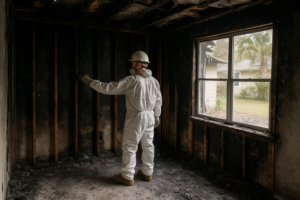
Smoke damage ceiling cleanup Tampa requires fast, professional work to avoid permanent stains, lingering odors, and health risks after a house fire. Ceilings trap soot and oily residues, and Tampa humidity and storm seasons make thorough cleaning urgent in Hillsborough County and the greater Tampa Bay area.
- Smoke Damage Ceiling Cleanup Tampa: Why Smoke Stains Ceilings After House Fires
- Smoke Damage Ceiling Cleanup Tampa: How Soot And Heat Create Stains
- Soot Ceiling Cleaning Tampa: Proven Cleaning Methods
- Fire Ceiling Damage Tampa: Repair Versus Replace
- Quick Checklist
- Frequently Asked Questions
Smoke Damage Ceiling Cleanup Tampa: Why Smoke Stains Ceilings After House Fires
Smoke rises and hits the ceiling first, which makes ceilings a primary target for smoke staining. Hot gases and soot carry oily particles that cling to ceiling paint and plaster. Tampa homes with popcorn or textured ceilings trap soot deeper than smooth surfaces. Florida humidity slows drying and can promote soot penetration into paint films.
Smoke composition varies by what burned, which affects cleanup choices. Plastics, synthetic fabrics, and kitchen oils create sticky soot that resists simple wiping. Electrical fires often produce fine, corrosive soot that discolors surfaces and damages nearby fixtures.
Smoke Damage Ceiling Cleanup Tampa: How Soot And Heat Create Stains
Heat and turbulence push soot into ceiling textures and seams. Soot particles are microscopic and follow air currents during a fire. Tampa wind and open windows during storms can spread smoke through HVAC systems and attic vents. Roof leaks after storms can mix water with smoke residues, making stains set faster.
Smoke residues can be acidic or oily, which impacts cleaning. Acidic soot can etch paint and drywall paper, and oily residues attract dirt later. Experience in Tampa Bay shows that even small kitchen fires can leave ceiling stains that spread if not removed promptly.
Soot Ceiling Cleaning Tampa: Proven Cleaning Methods
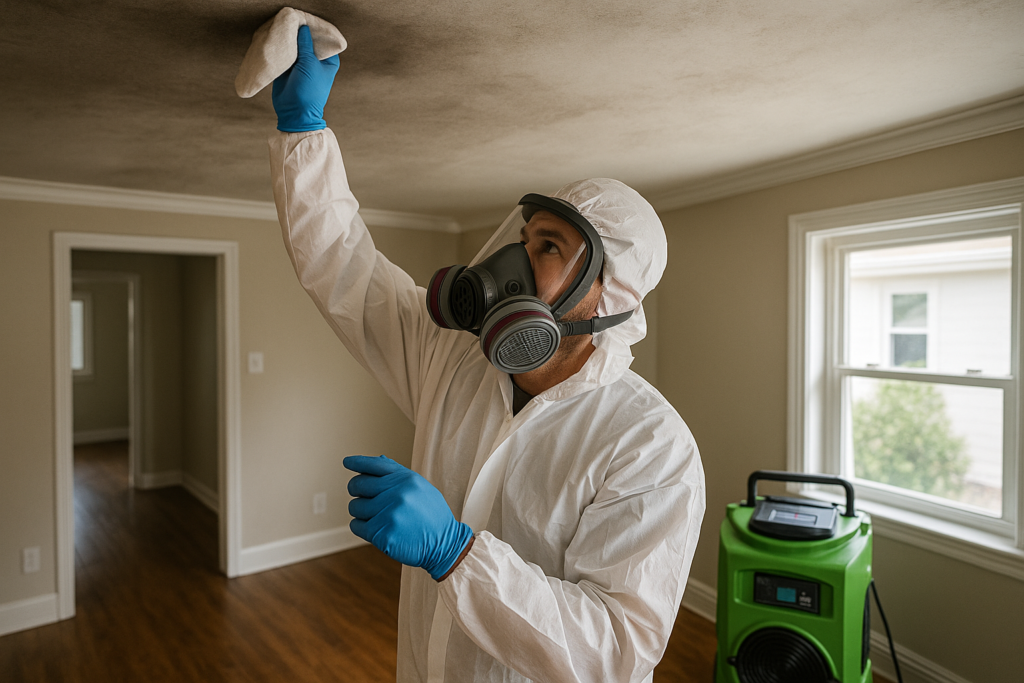
Technicians begin with a dry vacuum and HEPA filter to remove loose soot without smearing. Technicians often test a small area to choose chemical cleaners that dissolve oily residues without harming finish. In many Tampa homes after major storms, we often find hidden water damage inside drywall and insulation that homeowners cannot see.
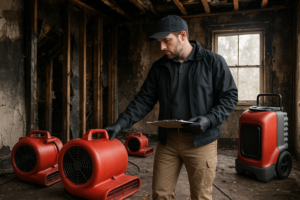
Rinsing, controlled agitation, and neutralizing agents remove smoke odor and residue. Tampa humidity means ceilings must dry quickly after cleaning to avoid mold growth. Technicians use air movers and dehumidifiers to speed drying and prevent secondary damage.
Fire Ceiling Damage Tampa: Repair Versus Replace
Repair often works when soot affected only the paint layer and drywall paper remains intact. Replacement becomes necessary when soot has burned into plaster, charred the drywall, or when water used to fight the fire caused swelling and delamination. Tampa restoration cost ranges vary by severity. Typical smoke ceiling cleanup in Tampa starts near a few hundred dollars for small rooms and can reach several thousand dollars for heavy soot, repairs, and repainting.
Insurance adjusters and homeowners face repair versus replace decisions after fires and storm-related water intrusion. RestoWRX documents damage and provides clear repair estimates that include drying, cleaning, and painting. From experience in Tampa Bay, smaller smoke stains can often be cleaned while heavy soot may require replacement of drywall or texture work.
Quick Checklist
- Stop HVAC and isolate the affected zones to limit soot spread.
- Document damage with photos for insurance and take safety precautions.
- Call professional smoke and soot cleaning technicians promptly.
- Dry damp ceilings quickly to prevent mold from Florida humidity.
- Keep family and pets out of heavily contaminated rooms until cleared.
Call RestoWRX for rapid assessment and trained technicians who handle soot ceiling cleaning and full fire recovery. Call to schedule a same-day inspection and start claims documentation with our team.
Frequently Asked Questions
How Long After A Fire Should I Clean My Ceiling?
Cleaning should start as soon as it is safe and the property is ventilated. Waiting more than a few days lets humidity and dust set stains deeper. Prompt action reduces total restoration costs and limits odor retention.
Can I Remove Soot With Household Cleaners?
Small surface soot may come off with mild cleaners, but most household products smear oily soot. Professionals use HEPA vacuums and targeted solvents to avoid permanent staining. Technicians also protect finishes and test products before full application.
Will Insurance Cover Smoke Ceiling Cleanup In Tampa?
Most homeowner policies cover smoke and fire damage, but coverage depends on your policy and cause of damage. Document damage and call your insurer early. RestoWRX can work directly with adjusters and provide detailed estimates.
Does Tampa Humidity Affect Smoke Cleanup?
Yes, Florida humidity slows drying and can cause soot to migrate and stain further. Rapid drying and dehumidification are vital after cleaning to prevent mold. Technicians use air movers and dehumidifiers to stabilize indoor conditions.
When Is Ceiling Replacement Necessary?
Replace ceilings when soot has burned into the drywall, when structural damage exists, or when cleaning cannot remove strong odors. Water intrusion from firefighting or storms often mandates replacement. RestoWRX helps homeowners decide repair versus replace with clear estimates.
Learn more about our full fire recovery and ceiling restoration options on our fire damage restoration services page. Read a focused guide on kitchen incidents at our kitchen fire restoration page.
For public health guidance on smoke hazards and cleanup safety, consult the CDC resource on fire and smoke safety at CDC smoke guidance. Tampa homeowners face hurricane winds, heavy rains, and occasional storm surge that can complicate smoke cleanup and create combined water and smoke damage. RestoWRX technicians document damage, perform targeted soot ceiling cleaning Tampa homeowners can trust, and coordinate drying, mold prevention, and repairs across Hillsborough County.